


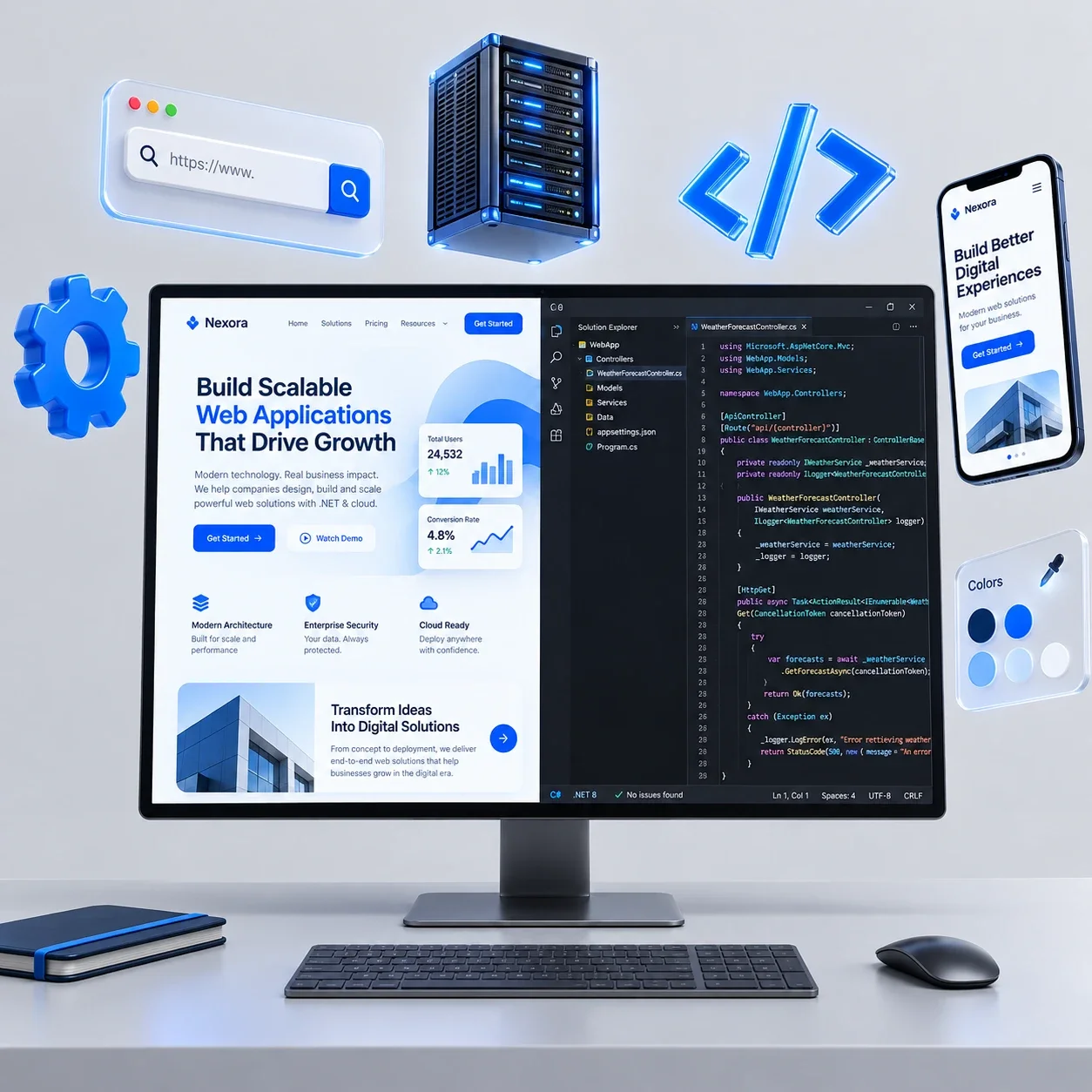
Web Engineering Architecture in the Digital Age: How Your Technical Foundation Defines Business Success
In modern commerce and B2B sectors, an enterprise website is no longer merely an online catalog. It functions as the operational core of digital marketing, the primary engine of trust, and the initial technical interface for key stakeholders. When initiating a digital launch or platform overhaul, organizations inevitably confront a fundamental strategic dilemma: deploy an established content management system like WordPress, or engineer a tailored, scalable software infrastructure using server-side frameworks like ASP.NET Core?
Engineering-focused agencies such as Man Ertebat maintain that technical selection must never be dogmatic; it must align directly with commercial objectives, data throughput, and optimal time-to-market. Below is a comprehensive breakdown of the decisive architectural factors.
The Strategic Selection Model: Why One Size Fits None
The single most frequent mistake in enterprise digital projects is applying a uniform technical stack to every business model. To determine the correct trajectory, digital initiatives should be categorized into two distinct operational paradigms:
Rapid, Cost-Effective Market Entry (CMS-Based)
For commercial entities seeking to validate product-market fit or establish immediate digital authority with controlled capital expenditure, a professionally engineered WordPress deployment—reinforced by lean UI frameworks and streamlined WooCommerce modules—serves as the optimal vehicle.
- Primary Advantages: Accelerated go-live cycle, intuitive internal editorial workflows, and broad turnkey marketing integration capabilities.
- Target Audience: Emerging startups, import/export traders validating demand, and baseline B2B professional service firms.
Scalable Enterprise Infrastructure & Custom Core (.NET Core)
When project requirements demand integrated corporate systems, high-concurrency B2B portals, heavy relational transactions, and uninterrupted connections to internal ERP/CRM databases, enterprise frameworks like ASP.NET Core (leveraging Razor Pages and Clean Architecture principles) represent the industry standard.
- Primary Advantages: Inherent enterprise-grade cyber resilience, minimal server response latency (TTFB), modular loose coupling, and indefinite horizontal scalability.
- Target Audience: Industrial manufacturing plants, advanced FinTech platforms, healthcare enterprises, and multi-division corporate holdings.
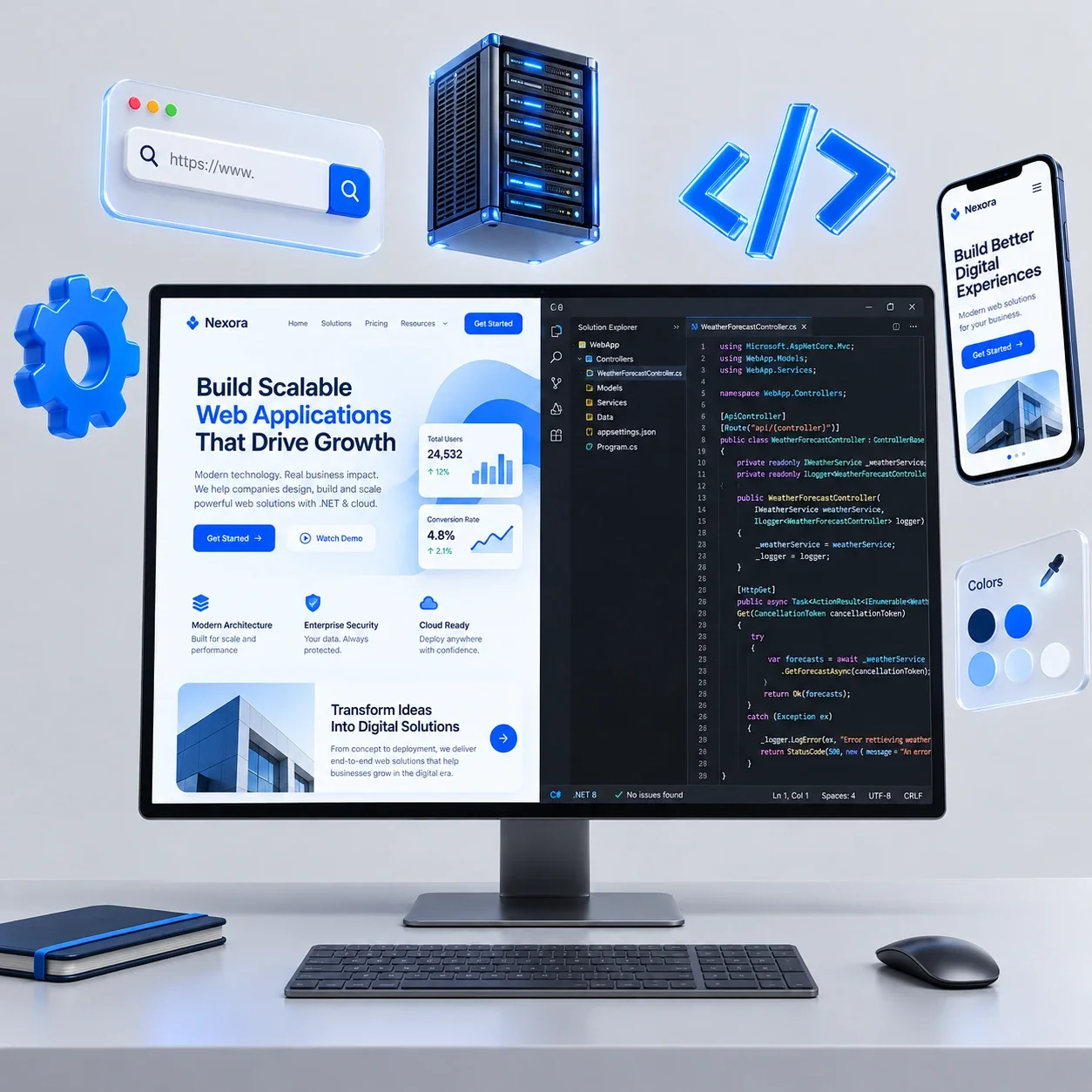
Architectural Breakdown: What Lies Beneath the Source Code?
The critical difference between turnkey site-building and genuine software engineering resides in data decoupling and long-term code stability. In professional software development frameworks, systems adhere to rigorous engineering design patterns:
Onion Architecture in ASP.NET Core
Implementing a layered Onion Architecture guarantees operational independence:
- Framework & Database Independence: Core business logic remains entirely autonomous from persistent storage layers (e.g., SQL Server, PostgreSQL) or third-party external services.
- Long-Term Maintainability: Modifying database structures or implementing external API connectors (such as automated logistics or payment gateways) occurs without mutating sensitive business rules.
- Systemic Reliability: Centralized global exception handling, reduced memory footprints, and architectural immunity against catastrophic cascade failures.
Technical SEO & Critical Web Vitals: The Engineering Backbone
A visually refined platform without organic search performance yields zero measurable return on investment. Technical SEO constitutes the structural foundation of discoverability:
- Performance & Core Web Vitals: Serving modern next-gen image assets, strictly governed native lazy-loading, and aggressive minification of static assets ensure rapid First Contentful Paint (FCP) and low Interaction to Next Paint (INP).
- Semantic Data Modeling (JSON-LD): Thorough Schema markup implementations—encompassing Organization, Service, Product, and Breadcrumb structures—provide search crawlers with unambiguous contextual signals regarding organizational authority.
- Internationalization via Hreflang: For cross-border corporate platforms, exact lexical isolation via standard
hreflangtags ensures proper multi-regional indexing without disruptive redirect loops.

Minimalist Visual Identity: Reflecting Engineering Discipline
Enterprise UI/UX should never burden the user with visual friction. Adhering to the principles of Swiss Graphic Design prioritizes structural clarity, disciplined grid layouts, high-legibility typographic hierarchies, and functional negative space.
A deliberate palette—anchored by cobalt blue for primary interaction targets, deep midnight navy to communicate corporate institutional strength, and cool silver-gray to provide structural breathing room—transmits technological authority and platform stability.

Strategic Summary: Choosing Your Platform Trajectory
Before committing development resources, evaluate these fundamental business requirements:
- Do you require direct, low-latency integration with proprietary internal systems or ERP networks in the near term?(If yes: invest in a bespoke .NET Core enterprise architecture).
- Is your primary business objective publishing credentials, corporate news, service overviews, and capturing qualified leads?(If yes: deploy a hardened, professionally customized enterprise CMS).
True web development excellence combines clean software architecture, proactive security controls, and organic search engineering—far transcending superficial visual assembly.

Comments (3)
The explanation of Onion Architecture and the separation of business logic from infrastructure was concise and practical.
The section on multilingual SEO and hreflang was particularly useful. It is often overlooked in international B2B projects.
A thoughtful guide. I agree that the technical stack should follow business requirements rather than personal preference.
Leave a Comment